Fresh catch daily · Order on WhatsApp 0787 668 888 · Pay with M-Pesa

From the dock

Stories from the sea.

Fishermen journeys, coastal recipes, and the blue economy.

From the dock

Our fish stories

Stories from the boat, the kitchen, and the blue economy. Tap a story to read it.

Blue Economy · 25 Jul 2026

SOFIA 2026: The Kenyan Fishing Nets Helping Solve 'Ghost Fishing'

A new UN fisheries report includes a quiet Kenyan success story: a simple, no-cost tweak to fishing nets that's helping cut down on 'ghost fishing.'

"Ghost fishing" is what happens when a net is lost or abandoned at sea but keeps on catching — fish, turtles, sharks, whatever swims into it — for months after any fisherman meant it to. It's one of the quieter problems in small-scale fishing worldwide, and a case study buried in the latest UN fisheries report traces a fix being tested right here in Kenya.

What was tested

Researchers worked with small-scale gillnet fishers to swap out one small part of the net: the synthetic cord that ties the headrope, replaced with a biodegradable cotton twine. Tuned correctly, the twine holds for a couple of months, then breaks down — the net loses its shape and stops fishing on its own, while a marked buoy floats up so the gear can still be found and recovered. In trials, the modified nets caught just as much as ordinary ones. Nothing lost, for a real gain if the net is ever lost or left behind.

Why it's a good sign

Gillnets like these are exactly the kind of gear small-boat crews along this coast use every day. A fix that doesn't cost a single fish, but quietly limits the damage when gear does go missing, is precisely the kind of unglamorous progress that keeps a fishery healthy for the next generation — the same idea behind buying straight from small-boat fishermen in the first place.

Part of a bigger pattern

Kenya's trial was one of three run under a joint FAO/International Maritime Organization program, alongside similar work on lobster traps in Brazil and crab pots in Indonesia — proof that small, local tweaks to traditional gear can add up to a real difference for oceans everywhere.

Want to see what's fresh this week? Browse our current catch.

Blue Economy · 25 Jul 2026

SOFIA 2026: The World's Biggest Fisheries Report Just Launched in Mombasa

The FAO's flagship SOFIA 2026 report launched right here in Mombasa — here's what its global fisheries data means for small-scale fishing on Kenya's coast.

In mid-June, the world's most important fisheries report was launched — not in Rome or Geneva, but right here in Mombasa, at the 11th Our Ocean Conference. The State of World Fisheries and Aquaculture (SOFIA) 2026 is the FAO's biennial check-up on the health of the world's oceans and the people who depend on them, and this year it happened in our backyard.

The headline numbers

Global fish and seafood production hit a record 235 million tonnes in 2024. For the first time, farmed aquaculture crossed 100 million tonnes on its own — a genuine milestone. Wild-caught fisheries, meanwhile, have held steady at around 92 million tonnes a year since the late 1980s, which tells its own story: the ocean's wild catch has a natural ceiling, and the world is already fishing close to it. About 73% of global fish stocks remain within biologically sustainable limits.

Why it matters on this coast

Buried in the report's regional detail is a number that means more to us than any global tonnage figure: small-scale fisheries across the Western Indian Ocean — Kenya, Mozambique, South Africa, and Madagascar — support more than 65 million people's food and income. That's not an abstraction here. It's Shimoni. It's the small boats that bring in what ends up in your FishBox, and the households those boats support.

What it means for your Jodari

One detail that jumped out at us: global tuna catches hit a record high in 2024. Jodari is one of our best sellers, and it's reassuring to see the wider tuna fishery being tracked this closely — a well-managed tuna stock is what keeps it on the menu for years to come, not just this season.

Curious what's in season this week? See what our fishermen brought in.

Product Guide · 25 Jul 2026

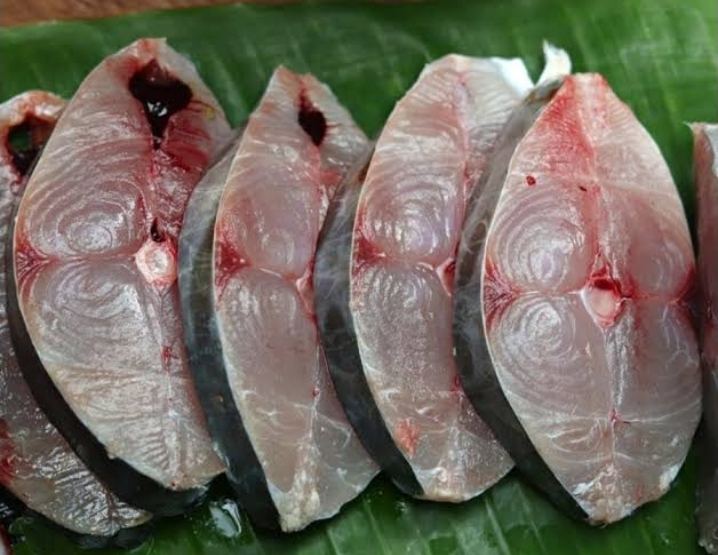
How to Cook Nguru (Kingfish): Steaks, Charcoal Grilling, and Biryani

Nguru (kingfish) is the pride of the Swahili coast — here's how to get the most out of its firm, steak-like flesh.

Nguru — kingfish — is the pride of the Swahili coast: a large ocean fish with firm, steak-like flesh that holds its shape no matter how you cook it. Here's how to get the most out of it.

Charcoal Grilling

Cut into thick steaks (about 3cm), and marinate for at least 30 minutes in lemon, garlic, and chili before grilling over hot coals — around 4-5 minutes per side. Nguru's dense texture makes it one of the most forgiving fish on the grill; it won't flake apart on the grate the way more delicate fish can.

Frying

Dust lightly in seasoned flour or a light spice rub, then fry in hot oil for 3-4 minutes per side until golden and crisp on the outside. A quick, weekday-friendly way to serve it.

In Biryani

Nguru is a classic biryani fish along the coast, prized because its firm chunks hold together through the layering and slow steaming that softer fish can't handle. Sear the pieces first to seal them, then layer into the rice for the final stretch of cooking so they warm through without falling apart.

A note on portioning

Because the flesh is so dense, a single thick steak (roughly 200-250g) per person is usually plenty, especially served with rice, ugali, or a good helping of sides.

Order Nguru (Kingfish) for your next meal.

Product Guide · 13 Jul 2026

How to Cook Jodari (Tuna): Grilling, Searing, and Sushi Tips

Jodari (tuna) is one of our best sellers because it's versatile — here's how to get the most out of it, grilled, seared, or raw.

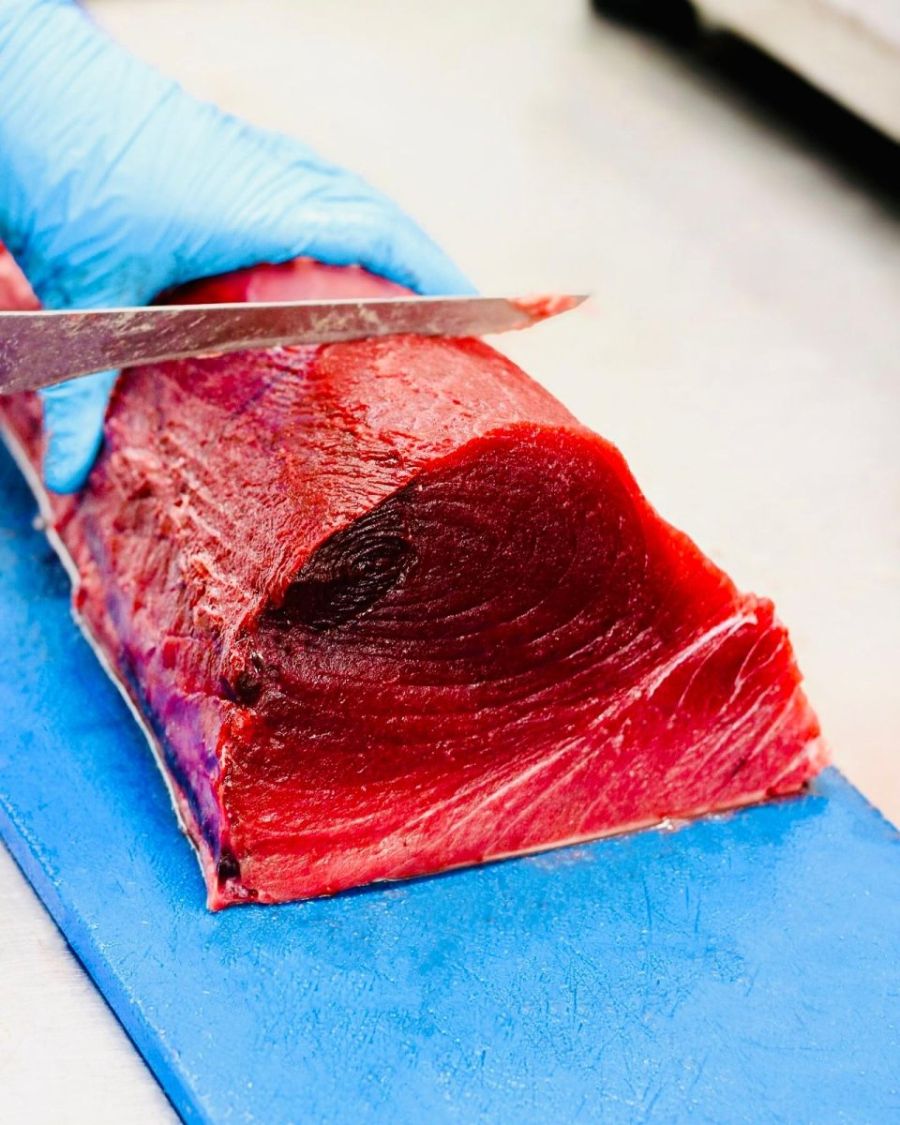
Jodari — tuna — is one of our best sellers, and for good reason: deep red, firm-fleshed, and forgiving enough to work across several cooking styles. Here's how to get the most out of it.

Grilling

Cut into steaks roughly 2-3cm thick, brush with oil, and grill hot and fast — about 2-3 minutes per side for a steak that's seared outside and still pink in the center. Tuna dries out and turns tough if you overcook it, so resist the urge to leave it on longer "to be safe."

Searing

Pat the steak fully dry, season simply (salt, pepper, maybe a crust of sesame seeds or cracked coriander), and sear in a very hot pan with a little oil for 60-90 seconds per side. You're aiming for a browned crust with a rare-to-medium-rare center.

Serving raw (sashimi-style)

Because of its dense, clean flesh, Jodari holds up well raw. If you're planning to serve it as sashimi, freshness is everything: use it the same day it arrives, keep it well chilled until the moment you slice it, and slice thinly against the grain. If you're at all unsure about the fish's freshness or handling, cook it through instead — better safe than sorry with raw seafood.

A note on portioning

Tuna's dense texture means a little goes further than it looks — a modest steak per person is usually plenty, especially served alongside rice or a salad.

Order Jodari (Tuna Fish) for your next meal.

Blue Economy · 13 Jul 2026

What Is the Blue Economy — and Why It Matters for Kenya's Coast

A short explainer on the blue economy — using ocean resources to build livelihoods without hollowing out the ecosystem they depend on.

You'll hear the term "blue economy" a lot around Kenya's coast these days. It's a simple idea underneath the jargon: use the ocean to build livelihoods — fishing, tourism, shipping, aquaculture — without wrecking the ecosystem that all of it depends on.

Why it's not just an abstract policy idea

For coastal communities like Shimoni, the ocean isn't a resource on a spreadsheet — it's the thing that feeds families and pays school fees. Overfishing, damaged reefs, or a collapsed fish population isn't a distant environmental headline; it's a direct hit to household income. A healthy blue economy is what keeps that income possible for the next generation of fishermen, not just this one.

What sustainable fishing looks like in practice

It's less dramatic than it sounds: small-boat, low-impact fishing methods instead of industrial trawling that scrapes the seabed. Respecting seasonal closures and size limits so fish populations can reproduce. Avoiding damage to coral reefs and mangroves, which are nurseries for the next generation of marine life. None of this is new — it's close to how coastal communities fished for generations before industrial-scale operations entered the picture.

Where we fit in

Buying directly from small-boat fishermen isn't just a sourcing choice — it's a vote for the kind of fishing that can keep going for decades instead of hollowing itself out in pursuit of short-term volume. Every order you place supports that model a little more.

Curious what's currently in season? See what our fishermen brought in.

Swahili Kitchen · 13 Jul 2026

5 Swahili Coastal Recipes to Make With Your FishBox

Five classic coastal Kenyan dishes to try with your next order — from coconut-based curries to grilled favorites.

Coastal Kenyan cooking leans on a handful of ingredients that show up again and again — coconut milk, tamarind, lime, and a generous hand with chili — built to let good fresh seafood shine. Here are five dishes worth trying with your next order.

1. Samaki wa Kupaka (Coconut-Grilled Fish)

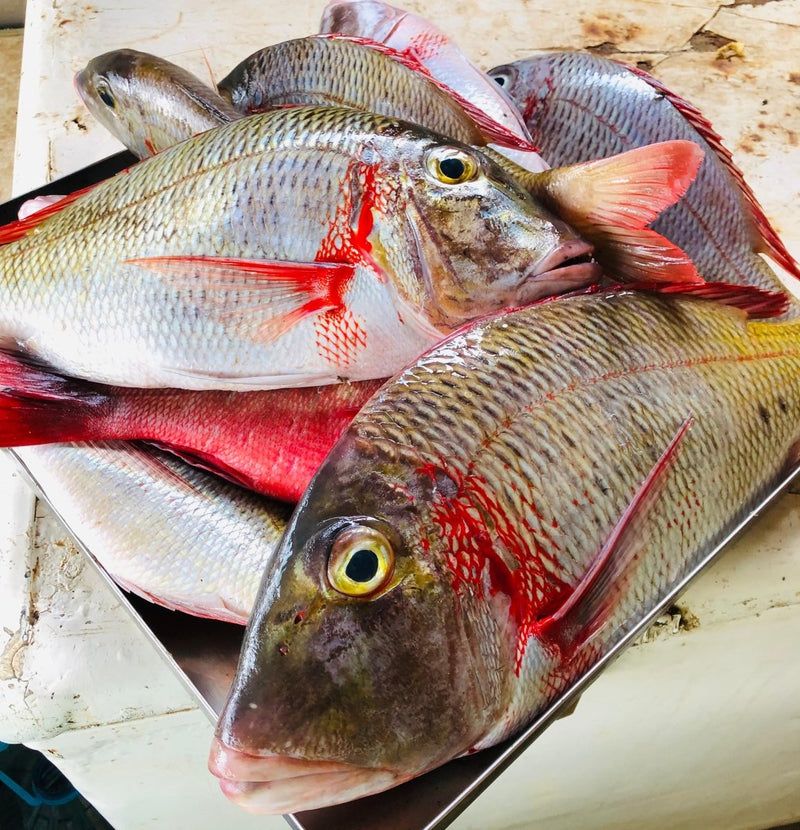
A whole fish like Changu (emperor fish) is marinated in a spiced coconut sauce, grilled until it starts to char at the edges, then basted with more of that same coconut sauce as it cooks. Rich, smoky, and a little sweet from the coconut.

2. Mnazi Prawns

Prawns simmered briefly in coconut milk with garlic, ginger, and curry leaves. Keep the cooking time short — prawns turn rubbery fast — and serve over rice with the sauce spooned generously on top.

3. Grilled Changu with Pilipili

A simpler preparation: whole Changu rubbed with garlic, lime, and a chili-and-herb pilipili paste, then grilled over charcoal. Coastal cooking at its most straightforward, and one of the best ways to taste the fish itself.

4. Pweza (Octopus) Curry

Octopus wants long, slow cooking to turn tender — simmer it in a tomato and coconut curry base with ginger and garlic until it's fork-soft, usually 45 minutes to an hour depending on size. Worth the wait.

5. Tuna Steaks, Swahili Spice Rub

Jodari (tuna) steaks seared hot and fast with a rub of cumin, coriander, garlic, and chili — keep the center rare to medium-rare so the steak stays tender rather than drying out.

These are starting points, not rules — coastal cooking is forgiving, so adjust spice and coconut to your own taste. Browse the fish and seafood for your next dish in our catalogue.

Fisherman Journey · 13 Jul 2026

From Boat to Box: How We Get Fresh Fish From Shimoni to Your Door

Follow the journey of your order from the small-boat fishermen of Shimoni to your doorstep — and why that short, traceable chain makes our seafood taste different.

Most seafood you buy has traveled a long, anonymous road — boat to broker to wholesaler to distributor to store shelf, with days (sometimes weeks) passing along the way. At MombasaFish, we cut that chain down to almost nothing.

Where it starts

Every order begins with the small-boat fishermen working the waters off Shimoni, on Kenya's south coast. These aren't industrial trawlers — they're local fishermen who go out daily, using methods that have been passed down for generations and that don't strip the reef bare.

From the water to your cooler

When a boat comes in, we buy the catch that same day. No holding it in storage waiting for a bigger order, no passing it through a chain of middlemen who each add their own markup and their own delay. The fish is cleaned, packed in an insulated cooler with ice, and prepared for dispatch — often within hours of coming out of the water.

Why it matters

Two things come from a short supply chain: better fish, and a better deal for the people who catch it. Because we buy direct, more of what you pay goes to the fishing families of Shimoni rather than layers of distribution. And because the fish spends less time in transit before it reaches our packing table, it arrives at your door tasting like it should — like it just came out of the ocean.

That's the story behind every order: a boat, a name, a coastline, and a promise that what you're eating is exactly what it says it is.

Ready to taste the difference? Shop our current catch.