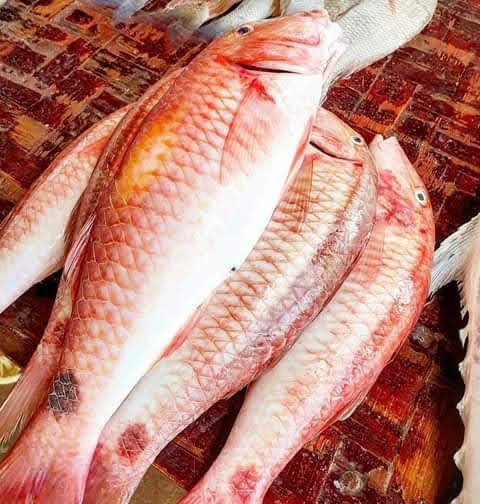
Handline and small-net fishing from open wooden boats
Sold by
Per kilogram
Price
KES 700 / kg
Flavourmild → strong
Firmnesssoft → firm
Oilinesslean → oily
Nutrition & health
~100 kcal · 19 g protein · 2 g fat · good source of protein and phosphorus
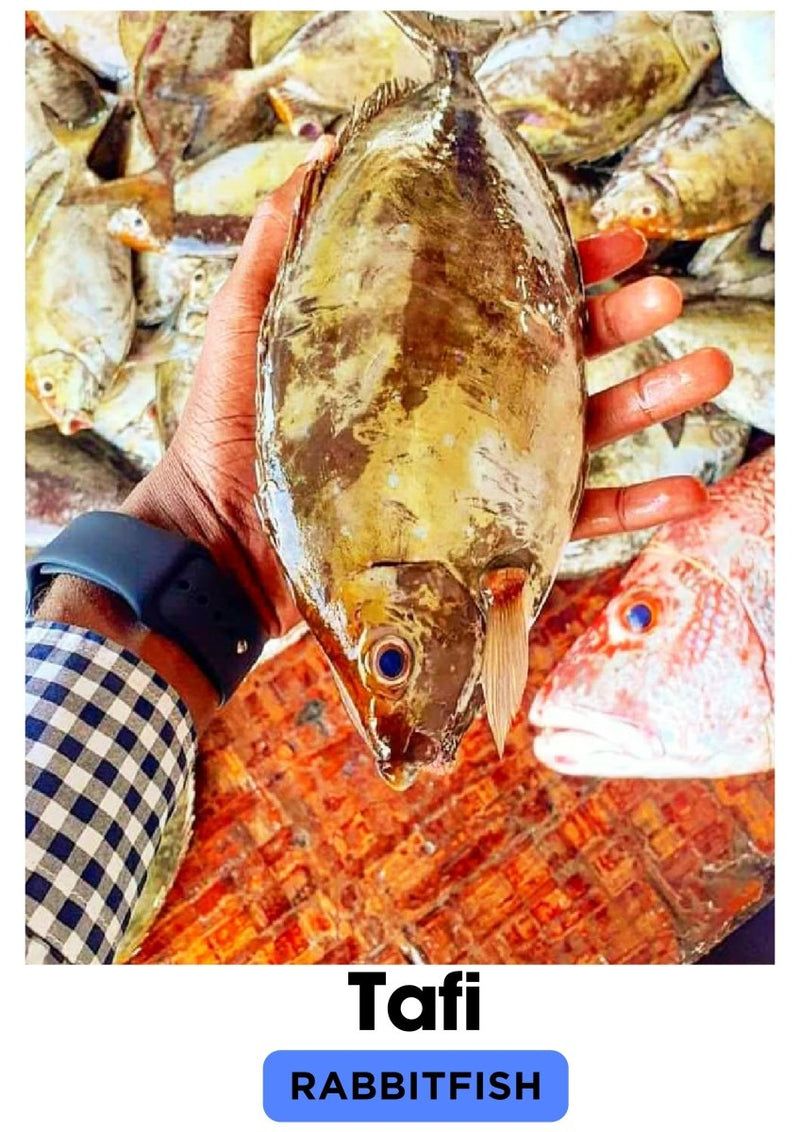
A lean, everyday fish and one of the most sustainable choices on the slab — tafi is abundant, fast-growing and central to the small-boat fishery.
Nutritional values are approximate, per 100 g raw edible portion, and vary with size and season. This is general information, not medical or dietary advice.
How to cook it
Fry whole, or grill. A staple of the coastal kitchen, best kept simple with salt, lime and pilipili.
FryingGrilling
Goes well with: Ugali, kachumbari, lime
Every order is cleaned to your preference — scaled, gutted, filleted, cut into steaks or left whole. Choose at checkout.
Storage & shelf life
Keep on ice or in the coldest part of the fridge (0–4 °C) and cook within 2 days of delivery. To freeze, pat dry, wrap tightly and freeze at −18 °C; use within 3 months. Never refreeze fish that has thawed.
Keeps: 2 days refrigerated · 3 months frozen
Traceable to the source
04:30 The small boats leave Shimoni
11:00 The catch lands and we buy it the same day, direct from the fisherman
13:00 Cleaned to your preference and packed on ice
→ Mombasa same-day by rider; other counties by express transport, cooler sealed
Every fish is looked over by hand before it is packed. These are the four things we check, and they are the same four you should check when it reaches you.
EyesClear and full. Never cloudy or sunken.
GillsLifted and looked at. Deep red, not brown or grey.
FleshPressed with a finger. It springs back.
SmellClean sea. Never ammonia.
Landed atShimoni and the Pemba Channel, Kwale County
Caught byHandline and small-net fishing from open wooden boats
Then it is packed. On ice, in a sealed EPS cooler that holds cold for up to 72 hours. Mombasa goes the same day by rider; everywhere else travels by express courier or bus.
Do these four checks yourself when it arrives. If any of them fails, send one photograph within 24 hours and we replace the item or refund it — we never ask you to send fish back. Read the guarantee.
Questions
Is tafi bony?
It has more fine bones than changu, but coastal families eat it whole and pick around them. Ask for fillets if bones are a concern.
Why is it cheaper?
Because it is abundant and lands in good numbers. Price here reflects supply, not quality.